 CareAide Prep
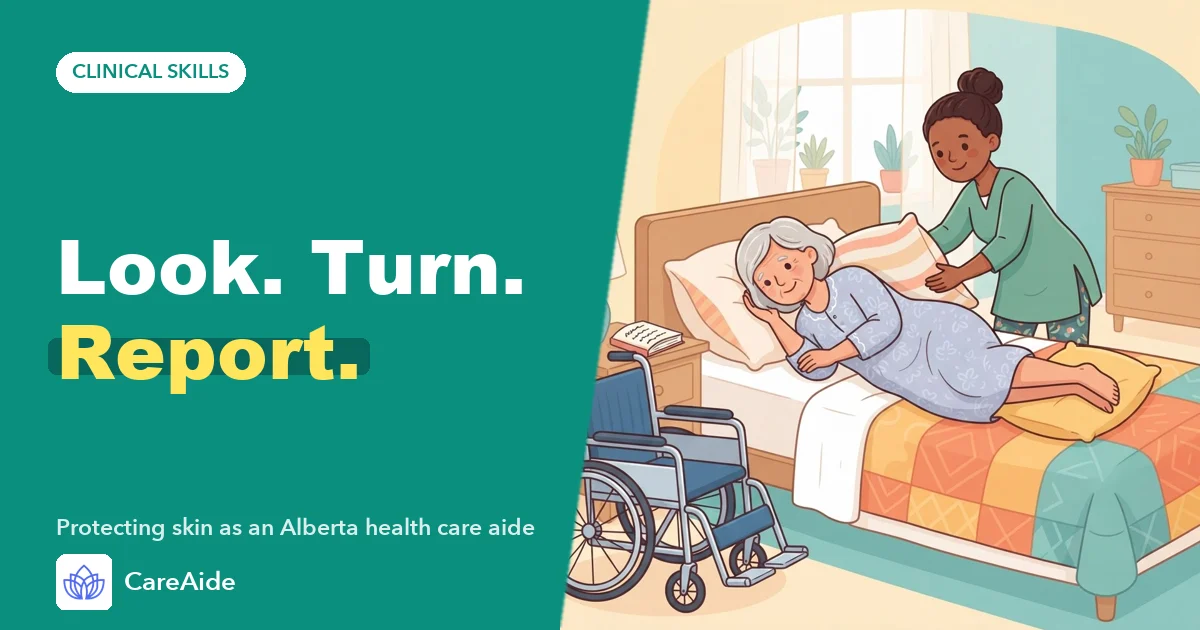
Pressure injury prevention for health care aides in Alberta: look, reposition, report, and never stage a wound
An Alberta health care aide prevents pressure injuries by looking at the skin during care, repositioning as the care plan directs, and reporting changes promptly. Knowing where that work stops, and the nurse's begins, is what keeps clients safe and answers the exam questions.
What does a health care aide do to prevent pressure injuries?
A health care aide in Alberta prevents pressure injuries by doing three things well. The aide looks at the client's skin during routine care. The aide repositions the client as the care plan directs, and reports any change to the nurse promptly. The aide does not assess, stage or treat a wound, because those decisions belong to a regulated health care professional.
Competency 2.1 asks aides to "Demonstrate an understanding of the client's care plan and the role of the HCA in implementing the care plan." Skin care is one of the clearest places where that role shows. The nurse decides the plan. The aide carries it out, and is often the first person to see that something has changed.
Why does skin break down?
A pressure injury is damage to the skin and the tissue underneath, caused when an area is pressed for too long. Pressure reduces the blood flow that keeps tissue healthy. The damage usually appears over bony areas, where there is little padding between the bone and the surface below.
Pressure is rarely the only cause. Friction happens when skin rubs against a sheet during a move. Shear happens when the skin stays in place while the body slides, as when a client slips down in a raised bed. Moisture from sweat, urine or stool softens skin and makes it easier to damage.
Competency 5.6 asks aides to "Demonstrate knowledge of common effects of aging, as well as the effects of acute and chronic health conditions of the client." Older skin is thinner, drier and slower to heal. A client who cannot move without help, cannot feel discomfort, or spends most of the day in a bed or chair is at higher risk.
What should an aide look for during care?
Bathing, dressing, toileting and repositioning all give a clear view of the skin. No extra task is needed, only attention during the care already assigned. Take Amira, a health care aide helping Mrs. Kowalski with morning care in Room 12. Mrs. Kowalski uses a wheelchair during the day and needs help to turn in bed.
As Amira helps her wash and dry, she looks at the areas that carry weight. These include the tailbone, hips, heels, ankles, elbows, shoulder blades and the back of the head.
The changes worth noticing are observations, not conclusions:
- Redness or a darker patch that is still there after the pressure has been off the area for a while.
- Skin that feels warmer, cooler, firmer or softer than the skin around it.
- A blister, a scrape, a crack or any open area.
- Swelling, or a client who says that a spot hurts, burns or itches.
- A client who flinches or guards an area when it is touched or when they are moved.
Colour changes can be harder to see on darker skin, so warmth, firmness and the client's own words matter even more.
This morning Amira sees a red area over Mrs. Kowalski's tailbone. It was not there on her last shift, and it has not faded by the time morning care is finished.
How does repositioning follow the care plan?
The care plan sets out how often a client is turned, which positions are used and what equipment supports them. An aide follows that schedule and does not shorten, lengthen or skip it on personal judgement. If the plan seems not to be working, the right step is to tell the nurse, who can review it.
How a client is moved matters as much as how often. Dragging a client up the bed creates the friction and shear that damage skin. Competency 6.7 requires aides to "Demonstrate safe use of body mechanics and patient handling techniques." Using the slider sheet, the lift or the second person named in the plan protects the client's skin and the aide's back together. The guide to safe patient handling for health care aides covers those techniques in more detail.
Everyday care does much of the prevention work. Skin is kept clean and is patted dry, not rubbed. Wet briefs and linens are changed promptly. Pillows, wedges and heel supports are placed where the plan says. Barrier cream or any other product goes on only if the care plan assigns it.
A client who refuses a turn is not forced. The aide explains why the turn matters, offers again a little later, and reports the refusal to the nurse.
What should an aide report, and how?
Any new or changed skin finding is reported during the shift in which it is found. Competency 3.4 requires aides to "Report changes in the client to the appropriate regulated health care team member in a timely manner." Waiting for the next bath day, or hoping the redness settles, lets a small change become a serious one.
A useful report says what was seen, where it was, and when. Amira finds the nurse before breakfast and tells her this. "Mrs. Kowalski has a red area over her tailbone, about the size of a loonie. It was not there on Tuesday. It was still red after she had been on her side through morning care, and she says it is sore. Could you come and look at it?"
That report holds only what Amira observed and what Mrs. Kowalski told her. It ends with a request, not a treatment. The structure is the one described in SBAR for health care aides, and it gives the nurse what is needed to decide the next step.
Amira then records the same facts. Competency 2.10 asks aides to "Report and/or record client information in accordance with employer documentation standards and guidelines." Her note states the location, the appearance, the client's words, the time and the name of the nurse she told. The article on DARP documentation for health care aides shows how to set that note out.
What does an aide never do with a wound?
The limits are firm, and they exist to protect the client. A health care aide does not assess a wound, name its stage or decide what caused it. Phrases such as "stage two" or "infected" are clinical conclusions, so they do not belong in an aide's report or chart note. "Open area the size of a dime with yellow drainage" is an observation, and that is what the nurse needs.
An aide also does not choose a dressing, change one that has not been assigned, or apply a cream or ointment on personal judgement. An aide does not massage a reddened area over a bone, because rubbing can add to the damage. An aide does not alter the turning schedule, and does not decide that a client may stay up in the chair longer.
If a dressing has come loose or is soiled, the aide tells the nurse and does not improvise a replacement. The page on the HCA scope of practice in Alberta explains where these lines sit across all areas of care.
How does skin care appear on the Alberta HCA exam?
The Alberta HCA Registration Examination has 100 multiple-choice questions, and the result is pass or fail. Skin care questions are usually short scenarios. Many belong to Provision of Care, the largest domain at 25 to 35 per cent of the marks. Others belong to Safety or Collaborative Care, depending on what the question asks.
A typical question describes an aide who notices a reddened heel or tailbone during care, and asks what the aide should do next. The wrong options tend to follow familiar patterns. One has the aide apply a cream or a dressing. Another has the aide rub the area, or wait and check again tomorrow. Another has the aide decide how serious the wound is.
The right option keeps the aide in role. It follows the care plan and reports the change to the nurse without delay. Competency 6.2 describes the thinking behind it: "Recognize and respond to potential risks in order to prevent harm and avoid injury to the client, self and others." On skin, responding means noticing early and telling the right person.
Common questions
What is a health care aide's role in preventing pressure injuries in Alberta?
A health care aide in Alberta prevents pressure injuries by observing the client's skin during routine care, repositioning the client as the care plan directs, and keeping skin clean and dry. The aide reports any change to the regulated health care professional, who decides what happens next.
Can a health care aide assess or stage a pressure injury?
No, a health care aide in Alberta does not assess, stage or diagnose a pressure injury. The aide describes what was seen in plain factual words, and a regulated health care professional carries out the assessment.
How often should a health care aide reposition a client?
A health care aide repositions a client as often as the client's care plan directs, using the positions and equipment the plan names. The aide does not change that schedule on personal judgement, and tells the nurse if the plan does not seem to be working.
What should a health care aide do after noticing a red area on a client's skin?
A health care aide who notices a red area reports it to the nurse during that shift, stating where it is, what it looks like and what the client said. The aide then records the observation according to employer documentation standards and keeps following the care plan.
Can a health care aide apply cream or change a dressing on a wound?
A health care aide applies a skin product only when the care plan assigns it, and does not choose or change a dressing on personal judgement. If a dressing is loose or soiled, the health care aide tells the nurse.
Keep reading
-
 Health care aide salary in Canada: hourly pay by province, from Job Bank
What is the health care aide salary in Canada? See low, median and high hourly wages for Alberta, Ontario and five more provinces, from Job Bank data.
-
 PSW resume with no experience: how new care aide graduates show placements, skills and certificates
How to write a PSW resume with no experience in Canada: list placements, show transferable skills, name your certificates, and see a short sample.
-
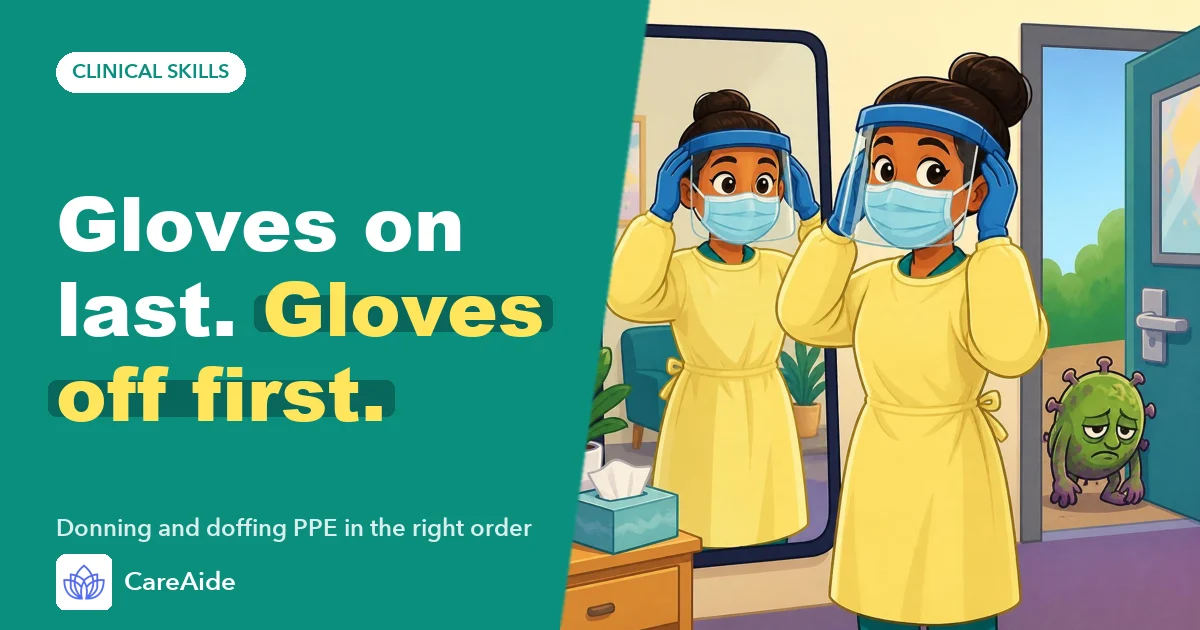 Donning and doffing PPE order: the steps care aides follow, and why the order matters
The donning and doffing PPE order for care aides: put on gown, mask, eye protection and gloves, and take gloves off first. See where Canadian sources differ.