 CareAide Prep
Signs of dehydration in older adults: what a care aide notices, offers and reports
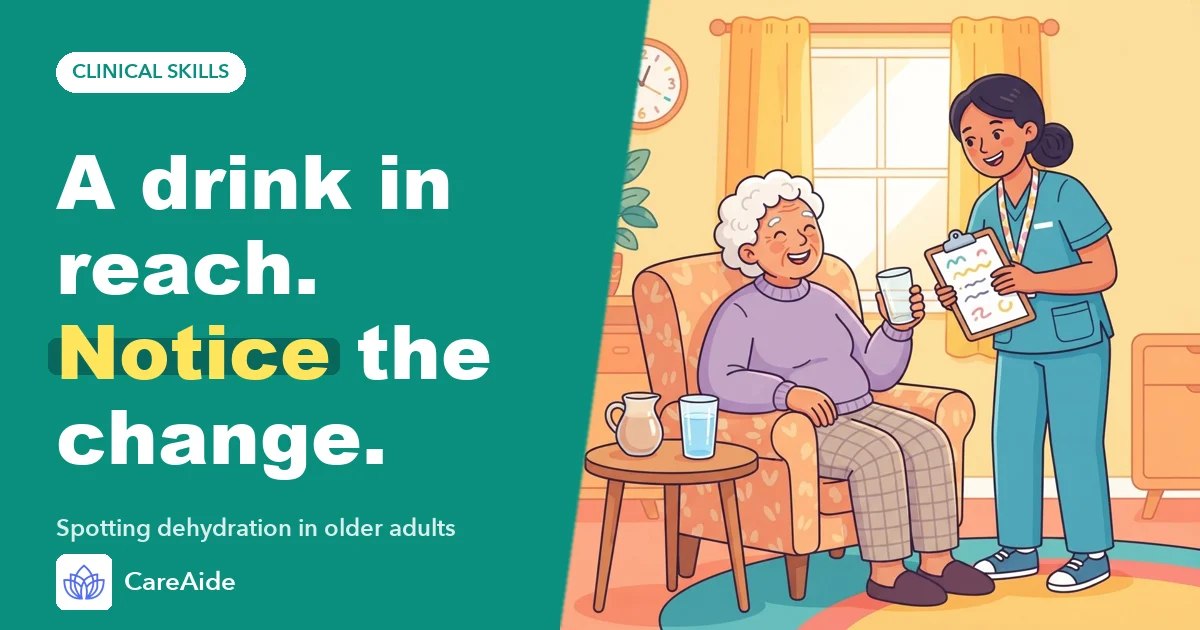
The signs of dehydration in older adults include a drier mouth and eyes, passing less urine than usual, tiredness, crankiness and dizziness. A care aide does not diagnose dehydration. The aide notices these changes, offers fluids the care plan allows, records what the client drinks, and reports what they see to the nurse or supervisor.
- Early signs
- Drier mouth and eyes, less urine than usual, tiredness, crankiness or dizziness
- Why older adults
- Older adults may not feel thirsty, so they may not drink enough
- What an aide does
- Offers fluids as the care plan allows, records intake, and reports changes
- What an aide does not do
- Diagnose, decide what is wrong, or change a fluid order
- Emergency
- Passing out, extreme weakness or poor alertness: call 911 or follow employer policy
What are the signs of dehydration in older adults?
According to HealthLinkBC, early signs of dehydration include a mouth and eyes that are drier than usual, passing less urine than usual, and feeling cranky, tired or dizzy. The same page describes a gradual picture. In mild dehydration a person may be thirstier than normal and urinate less. In moderate dehydration they may pass little or no urine for 8 hours or more and feel dizzy when they stand or sit up. In severe dehydration they may not urinate at all, may be too weak or dizzy to stand, and may pass out.
You do not decide how severe it is. Your job is to notice a change from how this client normally looks and acts, and to tell the right person quickly. Small signs such as a drier mouth, a smaller amount of urine or unusual sleepiness are worth a report, even when they seem minor.
Why are older adults more at risk?
HealthLinkBC says older adults may not feel thirsty, so they may not drink enough. It also notes that kidney problems, incontinence and physical conditions can make drinking or using the toilet difficult, and that eating a healthy diet can be harder for some older adults. Some medicines also increase urine output, including diuretics, laxatives, antihistamines and blood pressure medicines. A care aide never changes or stops a medication. If you think a medicine may be affecting a client, tell the nurse.
The WisTech Open textbook Nursing Assistant adds more reasons that show up in daily care. It says aging can create risks for food and fluid intake: poor teeth or dentures, a weaker sense of smell, taste or sight, and pain with movement or limited mobility. If moving hurts, toileting may be avoided, which can lead to drinking less. The book says these problems can lead to malnutrition, dehydration or both. This is why the little things, such as ill-fitting dentures or a cup the client cannot reach, are worth a note to the nurse.
What can make a client lose more fluid?
HealthLinkBC lists the common causes of dehydration as not drinking enough fluids and losing large amounts through diarrhea, vomiting or sweating. So a client with vomiting, loose stools or a hot room is a client to watch more closely. Report these things when you see them, even if the client seems well otherwise, because the nurse may want to follow up on the client's intake. A care aide does not need to work out the cause. Noticing the loss and passing it on is the useful part of the role.
What does the care aide do to help?
A care aide helps by offering fluids and making drinking easy. Always follow the care plan first. The textbook says each resident has a specific diet ordered, including the texture and consistency of liquids, and aides check the care plan so the correct foods and fluids are provided. This lowers the risk of choking and aspiration. If a client has thickened liquids ordered, you give thickened liquids, even if a thinner drink would be easier.
- Read the care plan for fluids, diet and any instructions about drinks.
- Offer drinks at the times and in the amounts the plan lists, and offer again during personal care, meals and visits.
- Place the drink within the client's reach. The guide to mealtime assistance covers safe eating and drinking.
- Offer toileting regularly. The textbook says clients who depend on others for toileting should be offered it at least every two hours, and the book notes that when moving hurts, a client may avoid toileting and so drink less.
- Record what the client drinks.
- Report what you saw and heard.
If the client refuses to drink, do not force them. Offer again a little later, try a different drink the plan allows, and report the refusal.
How do you record fluids?
The textbook says documenting intake is an important responsibility of nurse aides, because it gives nurses, dietitians and other staff insight into possible health concerns. Fluids are recorded in milliliters (mL). It gives the conversion: 1 ounce is 30 mL, so a standard cup of 8 ounces is 240 mL. Use your employer's forms and units.
The book also explains what counts. Anything that melts at room or body temperature is recorded as fluid, for example ice chips, ice cream, popsicles, Jell-O and clear broth. Soup is recorded with food intake. Record promptly and honestly, and never record fluids the client did not drink. The guides to DARP documentation and SBAR show how to chart and report.
What should you observe and report?
Report what you notice, in plain words, as soon as you notice it. Do not wait for the end of the shift if the change is sudden. Useful things to report include:
- A mouth or eyes that look drier than usual.
- Less urine than usual, or none for a long time.
- New tiredness, crankiness or sleepiness.
- Dizziness when the client sits up or stands.
- A client who is drinking much less than usual or refuses drinks.
- Coughing, a wet voice or difficulty when swallowing drinks, which the textbook says to report during feeding.
- New confusion or a change in alertness.
HealthLinkBC lists decreased alertness, new or worse dizziness and decreased urination as warning signs that call for a doctor. The textbook also notes that confusion or altered mental status in older adults can be a symptom of a urinary tract infection, and that low fluid intake can raise the risk of one. A care aide does not tell the difference between causes. Report the change and let the nurse decide what it means. The guide to normal vital signs explains measuring when it is assigned to you.
When is it an emergency?
HealthLinkBC lists signs of shock as passing out, feeling very weak or unable to stand, and not being alert or able to think clearly, and says to call 9-1-1 or other emergency services now. If a client shows these signs, call for emergency help according to your employer's policy, stay with the client and tell the nurse or supervisor. In home care there may be no nurse on site, so call your supervisor too. Do not wait and watch when these signs are present.
How does this appear on a care aide exam?
Exam questions on hydration are short scenarios. They test whether you notice the change, check the care plan before offering fluids, record intake accurately and report to the nurse. Practice with these scenarios builds the habit of observing first and reporting promptly. Wrong options often have the aide diagnosing dehydration, giving a drink that does not match the diet order, adjusting a medication, or waiting until the next shift to mention a sudden change.
CareAide offers exam practice for care aides across Canada, and it is free to start. It is practice for your exam, not a substitute for the skills training your program gives you.
Common questions
What are the first signs of dehydration in an older adult?
A health care aide or PSW may notice a mouth and eyes drier than usual, less urine than usual, and a client who seems tired, cranky or dizzy. The aide reports these changes to the nurse and does not diagnose the cause.
Why do older adults not drink enough?
A health care aide or PSW should know that older adults may not feel thirsty, and that pain with movement, incontinence, poor dentures and trouble reaching the toilet can all make a client drink less. Offering drinks regularly, as the care plan allows, helps.
Can a care aide diagnose dehydration?
No. A health care aide or PSW observes changes, offers the fluids the care plan allows, records intake and reports what they see. The nurse decides what the changes mean and what happens next.
How do care aides record fluids?
A health care aide or PSW records fluids in milliliters using the employer's form. One ounce is 30 mL, so an 8 ounce cup is 240 mL, and items that melt, such as ice chips and popsicles, count as fluid while soup counts as food.
When is dehydration an emergency for a care aide?
A health care aide or PSW treats passing out, being very weak or unable to stand, or not being alert or thinking clearly as an emergency. Call 911 or follow employer policy, stay with the client and tell the nurse or supervisor.
Keep reading
-
 How to give a bed bath: privacy, water temperature, order of washing and what to report
How to give a bed bath step by step: privacy, water no hotter than 105 F (40.5 C), cleanest to dirtiest order, drying, and skin changes to report.
-
 Fire safety in long term care: RACE, PASS and the care aide's role
Fire safety in long term care for care aides: what RACE and PASS mean, when not to fight a fire, why elevators are avoided, and following your home's plan.
-
 How AI is changing healthcare tutoring
What AI actually changes in health care aide education: unlimited applied practice, spoken rehearsal, and feedback on reasoning rather than recall.